By Grace Lorince
Belfast Walking Tour (Saturday, May 17th, 2025)
BELFAST INTRODUCTION
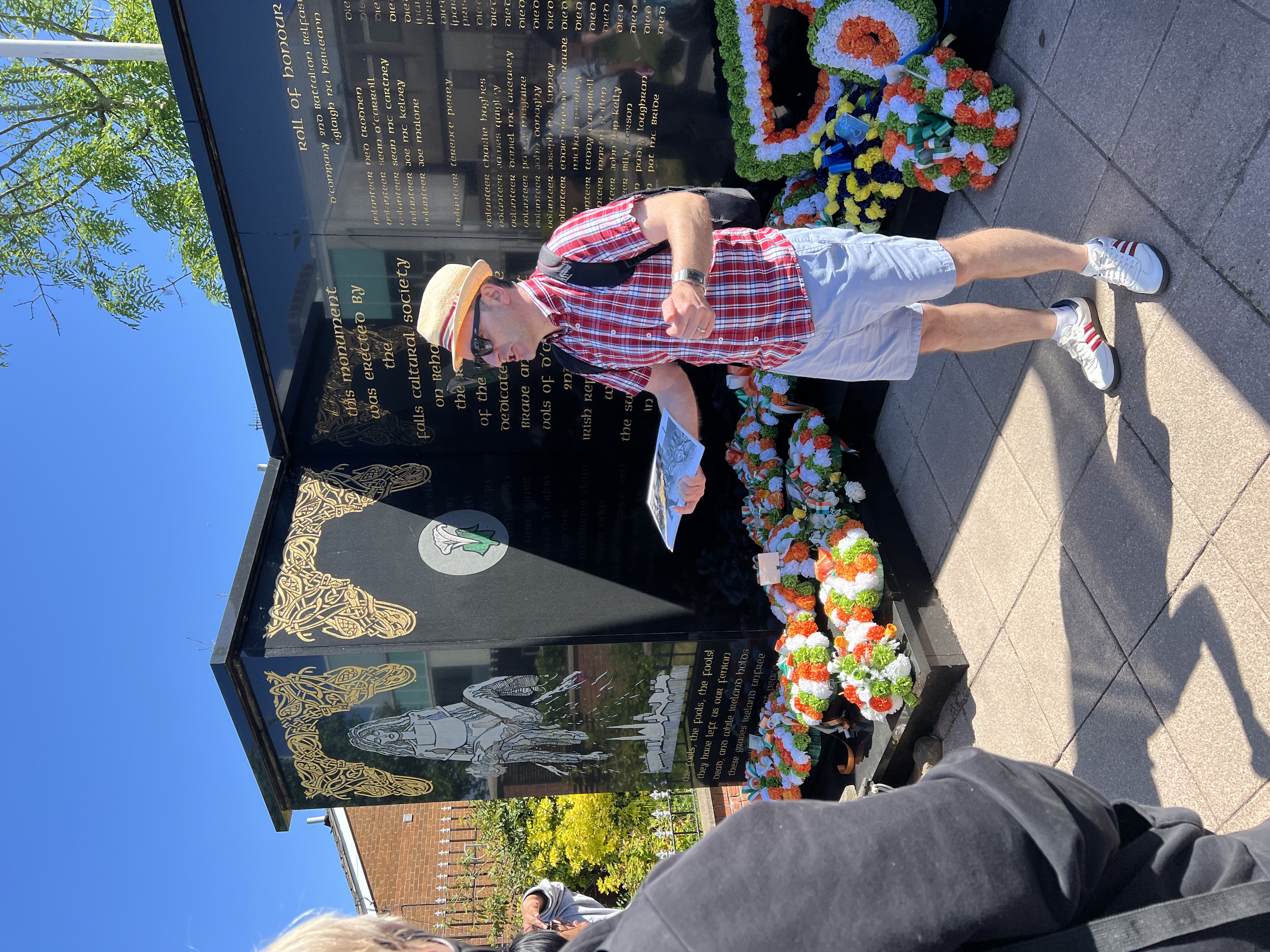
On Saturday, May 17th, 2025, the class took a day trip to Belfast, Northern Ireland. A portion of the United Kingdom, yet on the island of Ireland, Belfast was a different environment than what we were used to in the Republic of Ireland. Some of the differences included the UK flags waving in the air, the use of British Pounds instead of Euros, and of course, the prevalent memorandum of the Troubles. We got to experience these things up close on a walking tour of Belfast, led by Ulster University professor, Dr. Niall Gilmartin. A reliable source who not only specializes in the topic of the Troubles, but also can apply his own personal experience – growing up and living in Belfast during the conflict years. Prior to our day trip, we had a lecture with Dr. Gilmartin about media during the Troubles and the overall impact each had on each other. Now we got the opportunity to see the real-life ramifications in person.
THE FOCUS
Although we saw a plethora of things on our trip (including the outside of the Titanic Museum and St. George’s Market, which I mentioned in the blog post), I will be focusing more on the walking tour portion of this trip. I will discuss the analysis and comparisons between the two adversaries of the Troubles – the Unionists and Republicans.
BELFAST WALKING TOUR
We began our 2-hour long walking tour of West Belfast – an area heavily impacted by the times known as the Troubles. With Dr. Gilmartin as our guide, we walked along Falls Road and Shankill Road, discussing the events and history that took place in the not-so-distant past.
There were many things that stood out to me on this tour, but something that really struck me was the division between communities that can still be seen today. The Troubles are a division of not only Protestant and Catholics in Belfast, but the Unionists and Republicans (or the loyalists to the U.K., and those who wanted home rule/to join the Republic of Ireland). This division is commonly defined as the Unionists being Protestant, and the Republicans being Catholics.
One of the first things we saw on Divis Street (on the Southern portion of Falls Road) was Divis Tower. A 19-story, 200-foot-tall building, Divis Tower was a target for violence during the Troubles. In fact, various people were killed by gunfire in the building during by the R.U.C. (the Royal Ulster Constabulary), two of which were Hugh McCabe (20 years old) and Patrick Rooney (9 years old) on August 14th, 1969. Patrick’s death was a specific turning point for the escalation of violence because he was the first child to die during the violence of the Troubles.
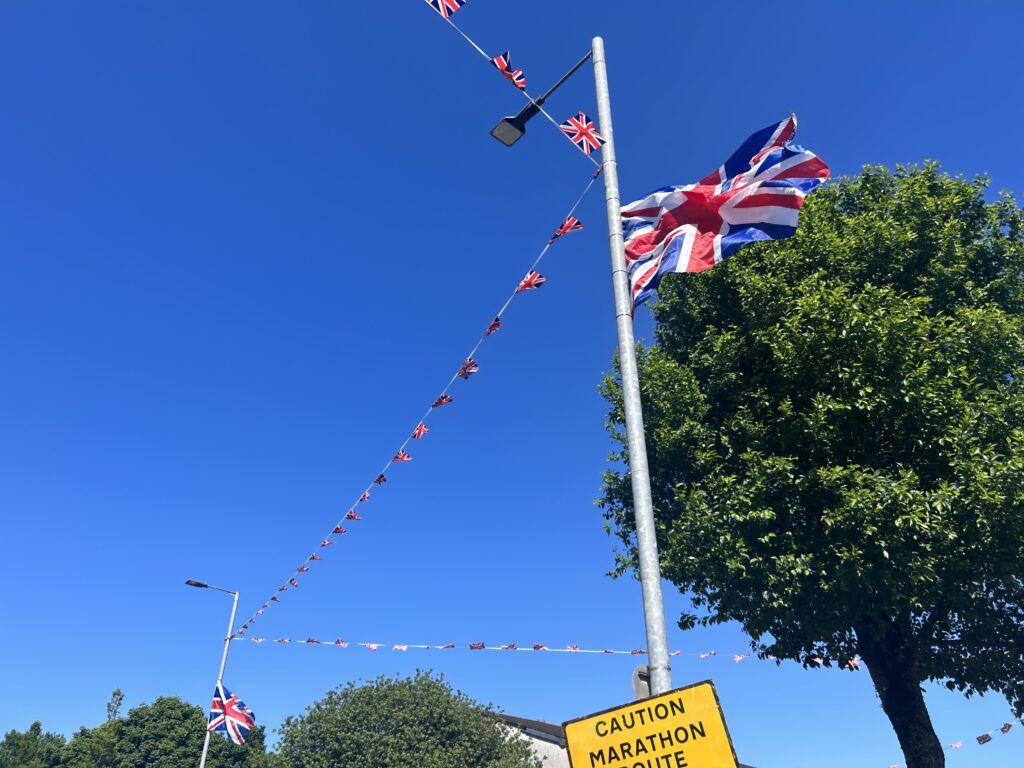
Additionally, the division was jarring, just walking through from one community to the next. For instance, on the Republican side there were Irish flags, or flags of the Republic of Ireland, hanging everywhere, but as soon as you crossed into the Unionist side of West Belfast, you began to see the flags of the U.K. hanging; even the mailboxes were painted red to symbolize Great Britain.
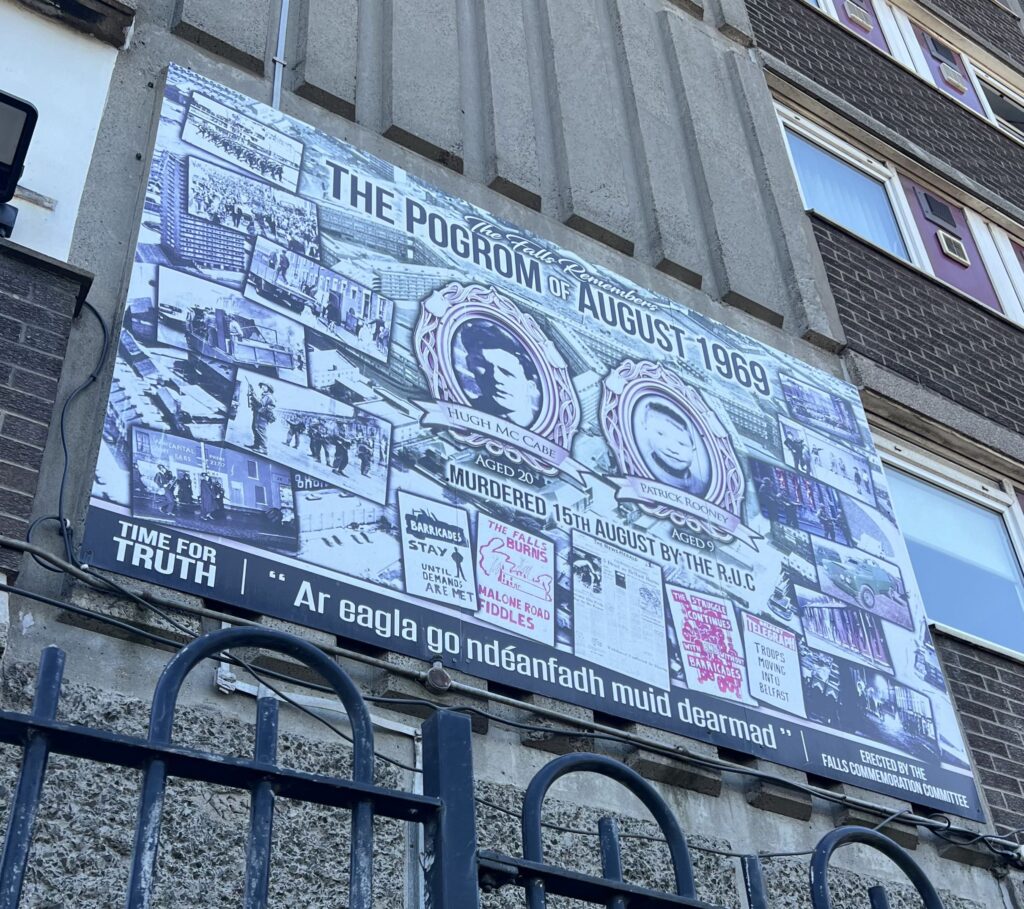
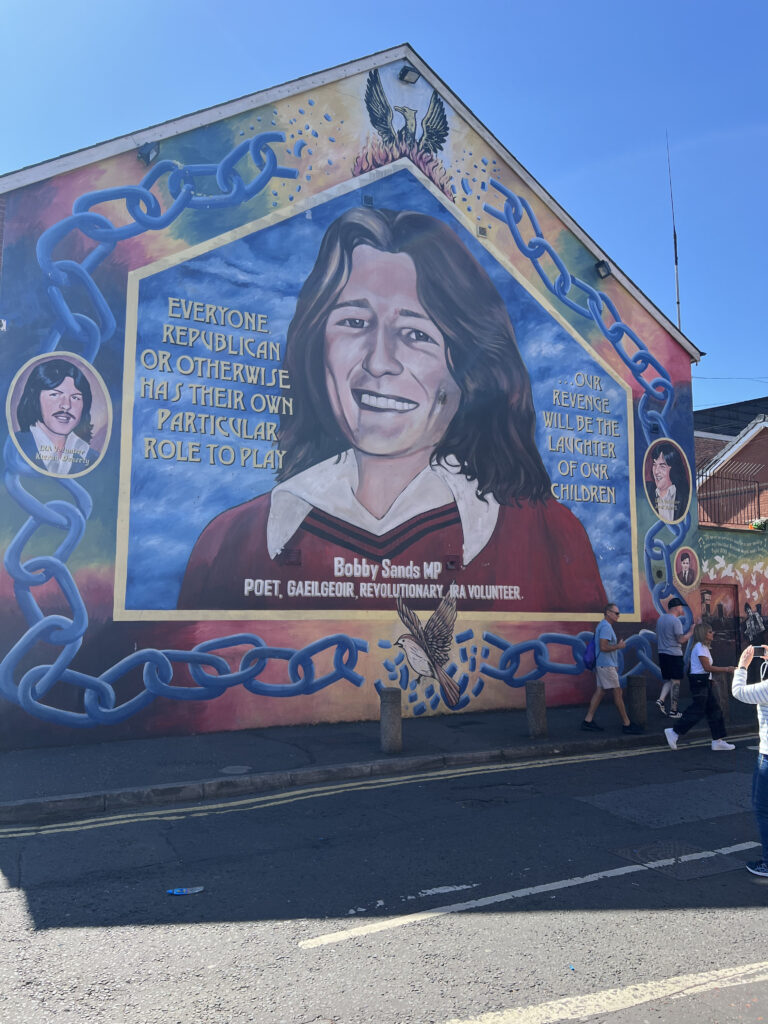
As we walked further on our tour, it didn’t take long to recognize a common theme: murals. Murals were prevalent throughout West Belfast to commemorate the lives lost during the Troubles, but the stories told through the murals on both sides of the conflict were commanding and preferential. On the Republican/Rebel side, they had many murals that portrayed the lives of victims of violence or those who were seen as “freedom fighters”. These are individuals like those who participated in hunger strikes, members of the IRA, or other forms of protesters. On this side, the murals were all “in memory of” or honoring these people, painted as activists fighting for a cause. One such mural honored Bobby Sands, Kieran Doherty, and Joe McDonnell – freedom fighters and IRA volunteers who died participating in a hunger strike in 1981.
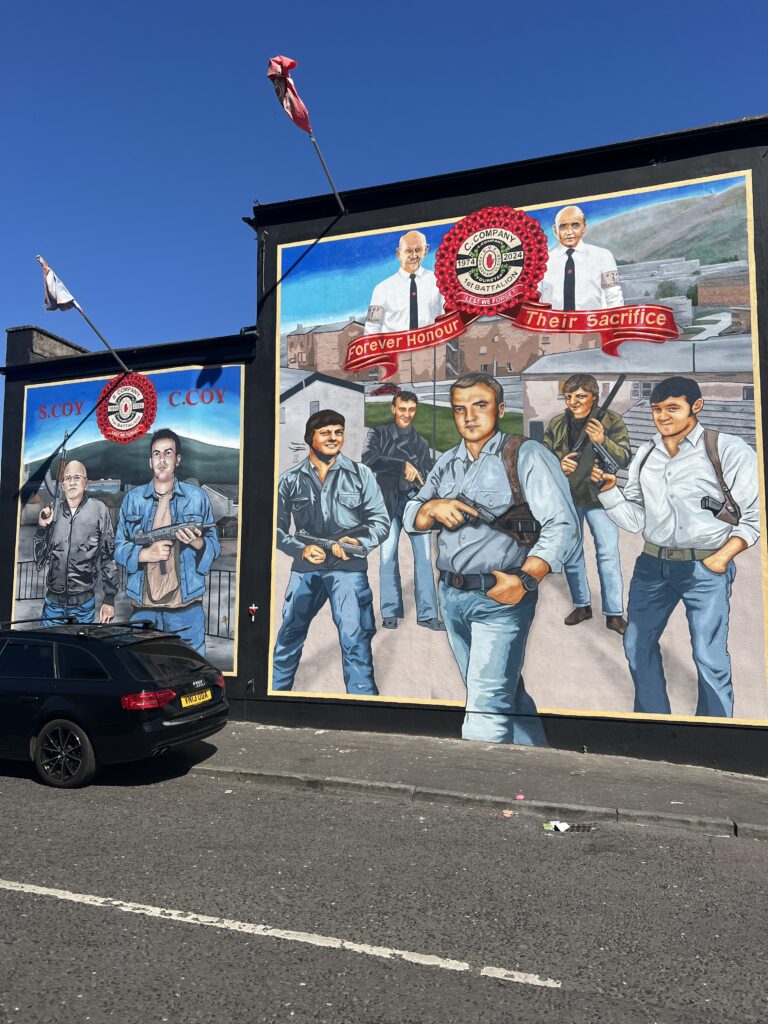
Opposingly, however, on the Unionist side of Belfast, the murals that were painted were more symbolic of heroic militarism (there were more guns and military equipment portrayed in these murals than in the Republican side). This was because Loyalists felt they did not get anything out of the peace process. Additionally, these militarized murals were very male dominated as women were seen as not having a place in the Union Paramilitary Organizations (this contrasted the Republican murals that commemorated the many women that participated in demonstrations and hunger strikes).
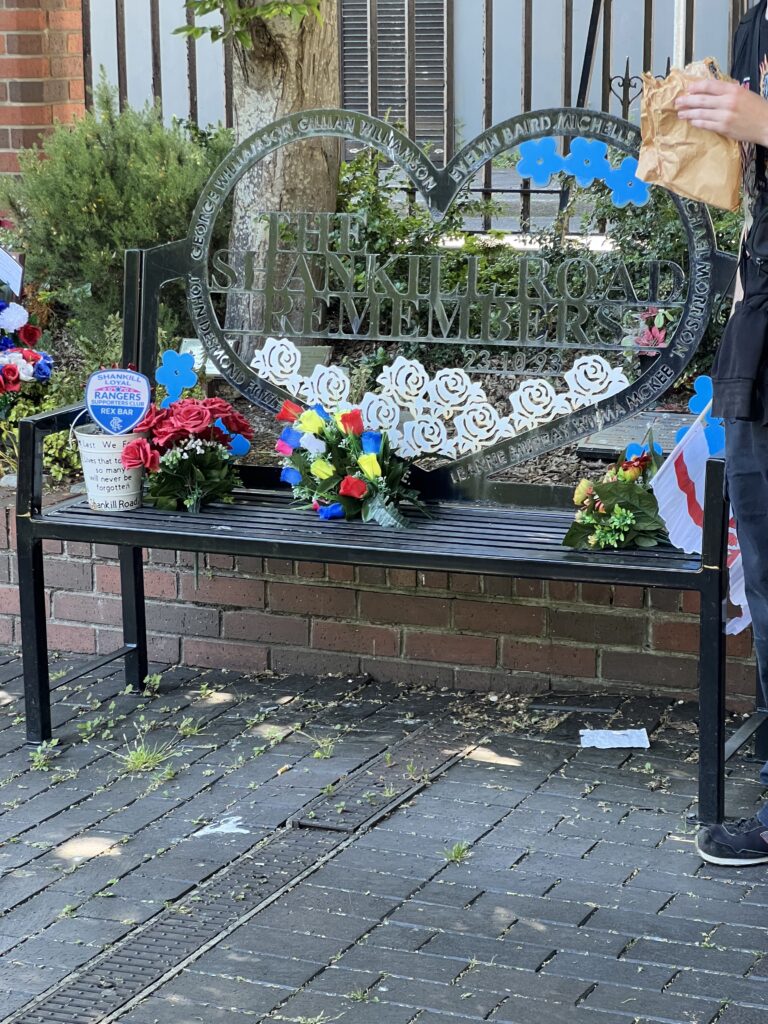
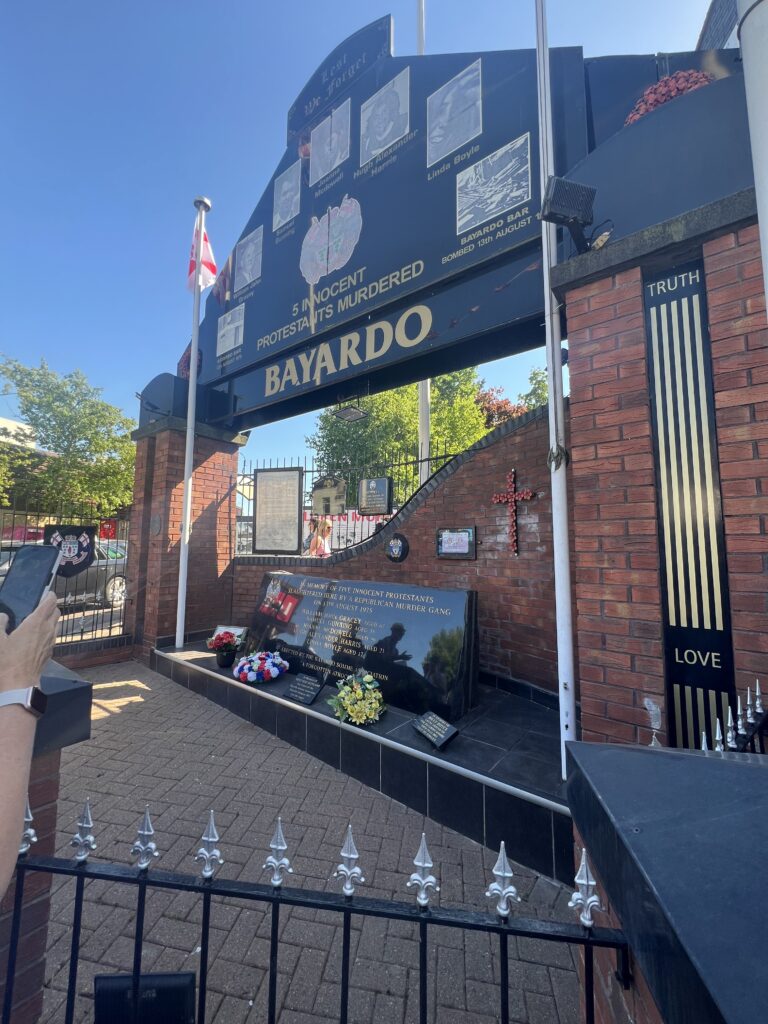
The Protestant memorials were more emotionally driven. Especially that of the Shankill bombing, which commemorates the deaths of the eight victims killed in an IRA attack on October 23rd, 1993. The Unionists intentionally called out the IRA for “killing innocent children” and compared the freedom fighters to terrorists. These memorials were graphic, leaving nothing to the imagination of the injury caused and the pain felt. They especially dug deep with the memorialization of young children who died as a result of the conflict like the Shankill victim Michelle Baird, who was 7 years old when she died.
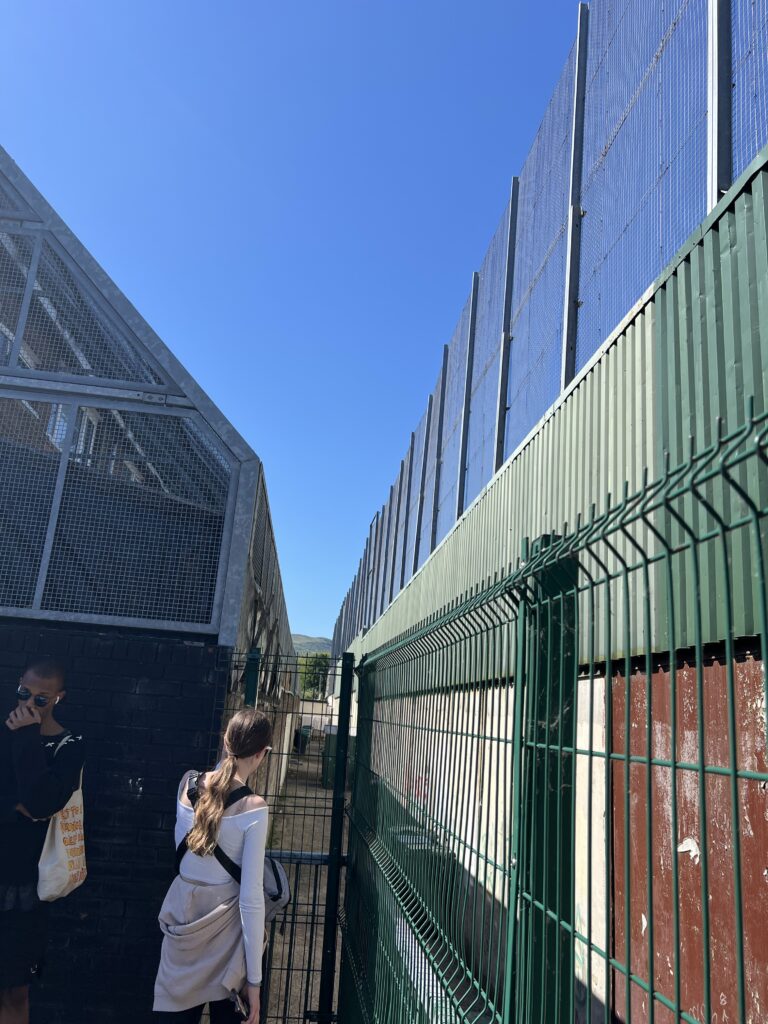
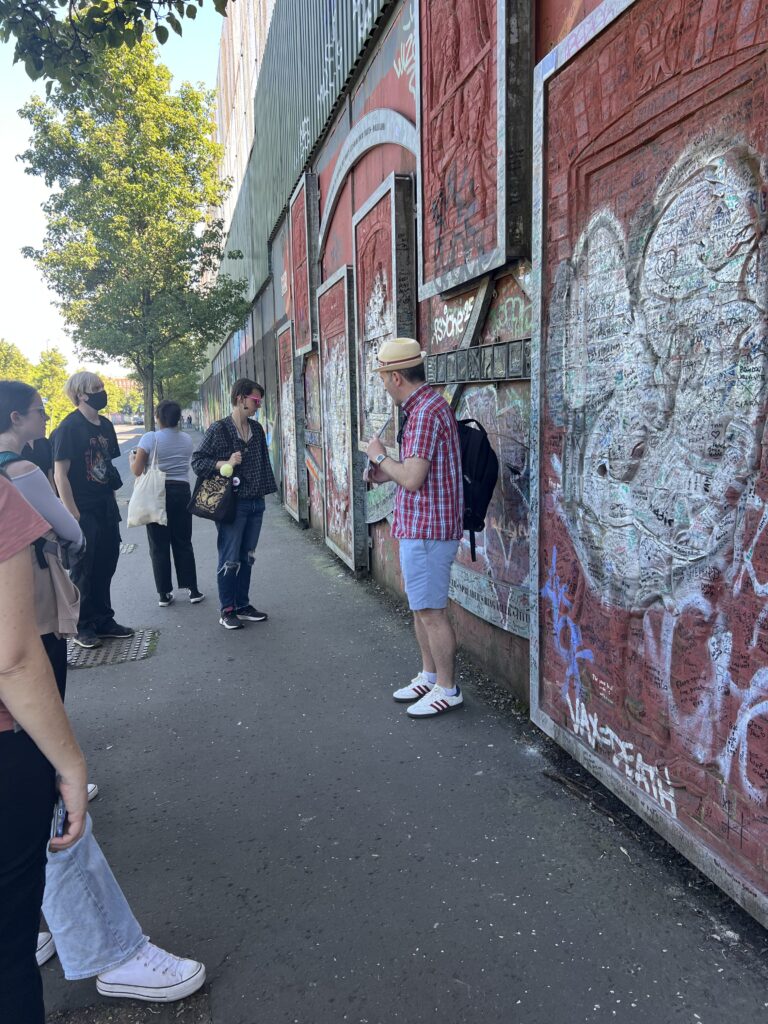
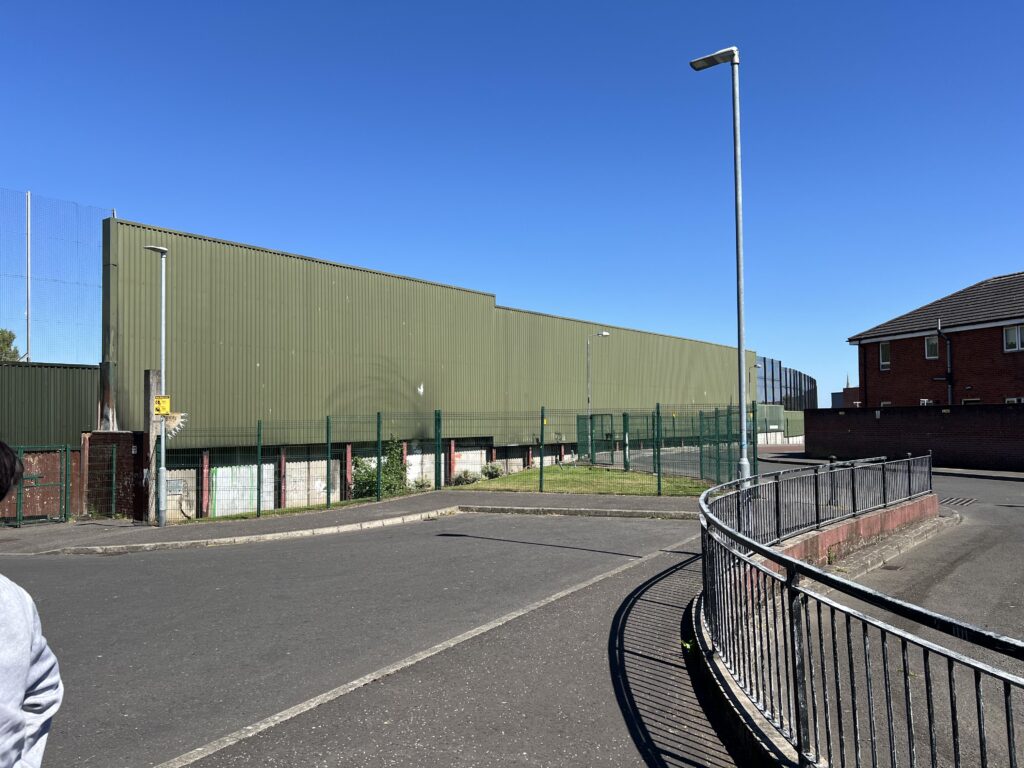
Another important ramification of the Troubles that we witnessed were the Peace Walls. Communities split right down the middle because of the violence. These Peace Walls stood to be at least 20-feet tall and span for more than 20 miles. Initially intended to be temporary structures, these effective barriers became a permanent (and even upgraded) part of daily Belfast life.
TOUR TAKEAWAYS
Something else I found oddly dissonant is how completely different the City Centre was compared to West Belfast. The Centre felt like a shopping metropolitan, with a plethora of shopping centers and big brands. It was really jarring walking ten minutes from a memorial about dead children to a 4-story clothing store.
Although considered a very safe city now, not seeing conflict in over 30 years, there is no denying that the unsteady and nerve-wracking dissonance between the two communities of Belfast is still discernible. Especially since the gates between the communities still close every night at around 9:00 PM, it is obvious that the violence is over but not forgotten. The division is still stained into the cement of West Belfast.