By Alex Zahniser
One of the Irish media visit’s we did as a class was to IFCO, or the Irish Film Classification Office. This office works with major film studios to give their movies a classification, or as we know it, an age rating. While studios do not have an obligation to work with IFCO to get films classified, most want to work with it because it looks good to have the IFCO approval on films. IFCO also technically works under the Department of Justice in Ireland. One of the main challenges of IFCO is making sure that films are rated suitably for general audiences and trying to strike a balance between giving moviegoers warnings about the content of a movie without spoiling major plot points of a movie. Because of this IFCO highly encourages audiences to check films on their website for full details if they are unsure of seeing them.
IFCO was established in 1923, then the Official Censor of Films (Irish Film Classification Office). This was established by the Censorship of Film Act of 1923. This act also saw that all films shown in public had to have the Censor’s seal of approval, and that the Censor could cut or ban any films it deemed indecent, obscene, or blasphemous. This is because life was still heavily dominated by ideologies of the Catholic Church in Ireland, and it would make IFCO cut or ban any films with messages they didn’t agree with. Later, the organization would loosen its approach to censorship and would be called IFCO. IFCO now classifies films, does some tweaking of films to fit classification, and rarely bans films. According to our guide during our tour, David, IFCO has not banned a film in 32 years.
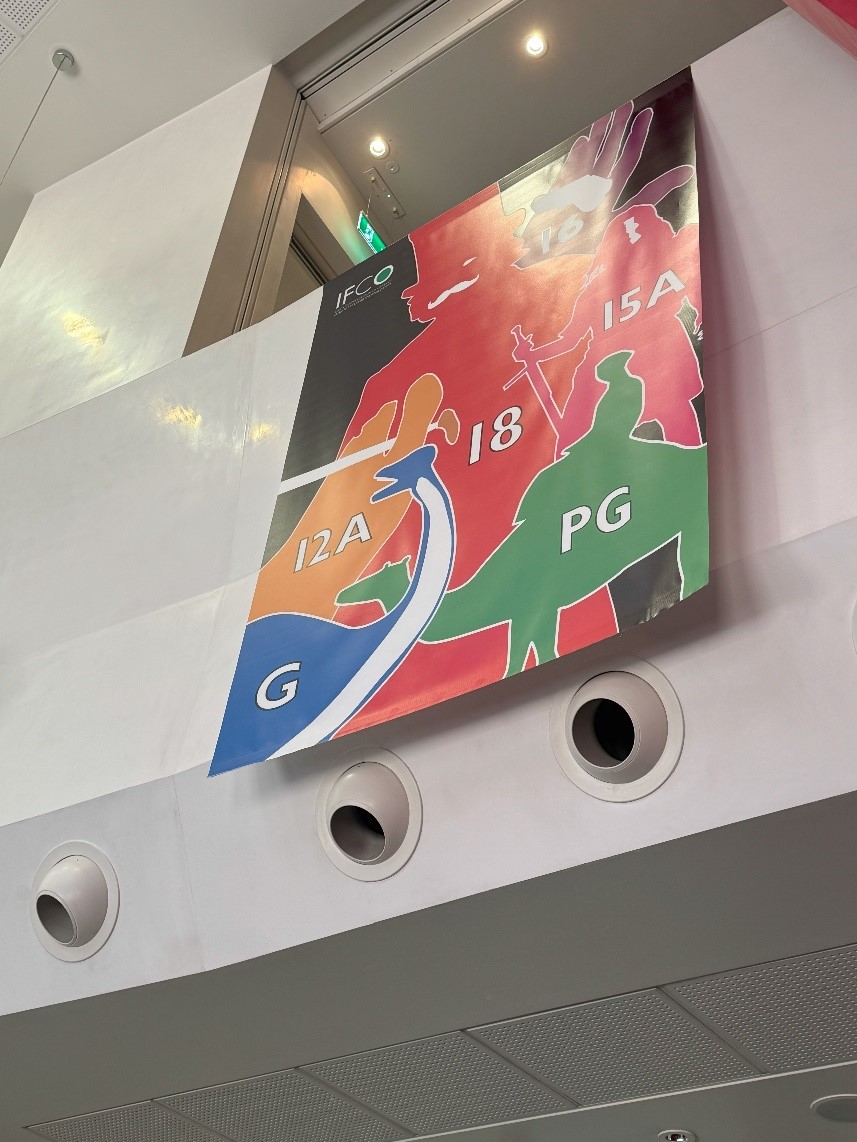
IFCO currently has about six classifiers. When classifying films, about two or three of these classifiers sit down to watch a film at a time. Three classifiers at a time are usually saved for bigger films. The classifiers look at four categories to determine a films rating – Violence, Drugs, Sexual Content, and Language. Once it is determined how strong each of these categories is, a film could be given one of six different ratings. The ratings are as follows – G, PG, 12A, 15A, 16, and 18. 12A functions like a PG-13 rating in America. And 15A and 16 are similar to an R rating. 18 is similar to our NC-17 rating, and as such it is also not used much. The 15A Rating and 12A rating are most common, as in 2024 367 films were classified as 15A and 270 were classified as 12A, according to the handout we were given during our visit. After the classifiers discuss the ratings they have made, they will decide on which rating a film should get based on which classification was argued the best. However, if a film’s distributor does not agree with the classification IFCO gives their film, they can go through an appeals process.
IFCO will regularly do surveys for parents in order to make sure that their ratings are accurate, especially when keeping children in mind. IFCO also may reclassify films, especially when they are being re-released. According to David, film classification is a part time job, and the current classifiers come from varied backgrounds. The Classifiers are limited to screening two films per day and can’t watch more than 5 hours in a day. They also have to mix up genres, i.e. watching a horror movie, followed by watching a Pixar movie. This is so that they remain active and are able to intelligently classify the films.
Besides classifying movies, IFCO also classifies trailers, and gives ratings to some video games. The same ratings used with the films are given to film trailers, however all film trailers must be given a 15A rating or lower. Even if a film is above 15A, its trailer must be edited to be 15A since more viewers will see these. But I’m sure this doesn’t happen too often. According to one of our handouts, only 13 trailers were classified by IFCO in 2024. Some video games are also given to IFCO to be rated. However, this uses a different rating system. It uses the same rating system that games are given in many European countries – the PEGI system. According to their own website, PEGI will give a game a rating of 3, 7, 12, 16, or 18 (Pegi Public Site). This is very similar to the American system for rating games, which would give a game an E – Everyone, E10+ – Everyone 10 and Up, T – Teen, M – Mature, or AO – Adults Only. To screen the video games, classifiers will either play the games, watch walkthroughs, or be sent the most extreme parts of the game by distributors in order to properly give the game an accurate rating. IFCO works with PEGI on games to determine if any games need changed for an Irish audience specifically. As such, this also does not happen too often. According to one of the handouts, IFCO only classified 22 games in 2024.
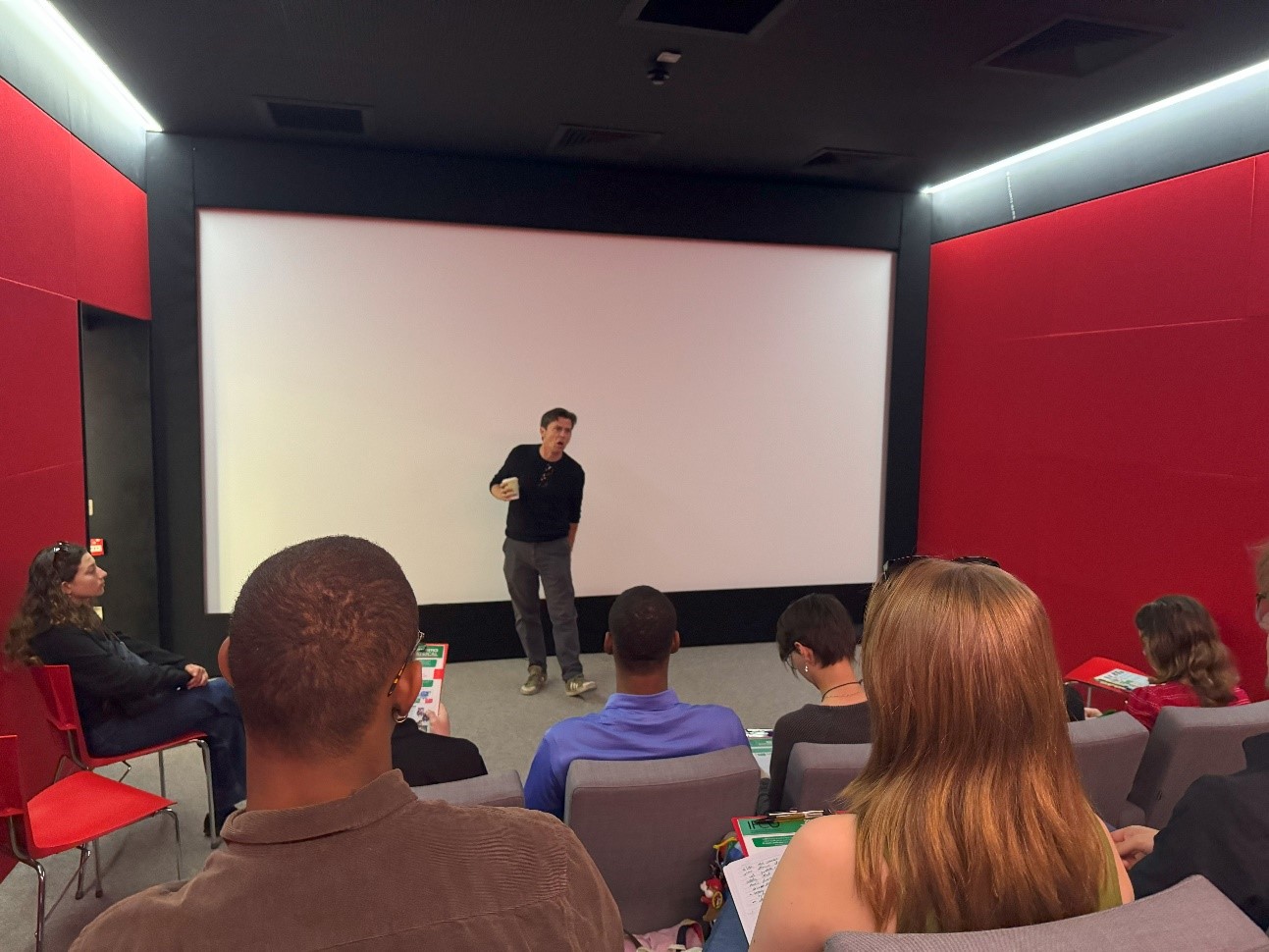
During our visit to IFCO, we met the classifier David, whom I already mentioned. David explained the general workings of IFCO to us, which is how I learned most of the information in this paper. He explained to us the Censorship of Film Act of 1923 and IFCO’s history, the classification system that IFCO uses, and took questions to teach us some of the finer details of IFCO’s operations. We also got to watch an Irish short film and classify it as a part of our site visit. We watched the short film The Golden West, which was about a pair of sisters searching for gold in the Irish countryside, and they fight and get into arguments over what they are doing. It was a very good short film; however it had some very adult themes, mainly that had to do with suicide. As a result, we gave the film a 15A classification.
Overall, the site visit was well worth it, and it was fun to see how classifiers go about classifying films. I think it is very interesting just how different IFCO classifies films compared to the United States. While they are similar and have become more liberal with film’s content now, there are many differences as to how films are handled, especially when looking at the language and drug and alcohol use. Irish culture is much different in these regards, and as such, this affects classifications much differently than in the United States. Irish film is significantly different from Hollywood film, and as such it is very interesting to get to study it.
Works Cited
“General Information.” Irish Film Classification Office, Irish Film Classification Office, www.ifco.ie/en/IFCO/Pages/General-Information. Accessed 14 May 2025.
“Pegi Age Ratings.” Pegi Public Site, Pan European Game Information, pegi.info/page/pegi-age-ratings. Accessed 14 May 2025.