By Grace Lorince
RTÉ Tour (Tuesday, May 13th, 2025)
RTE INTRODUCTION
RTÉ, or Raidió Teilifís Éireann, is Ireland’s public service broadcaster that produces and broadcasts news and entertainment content for television, radio, and online mediums. RTÉ is Ireland’s oldest television broadcaster and offers various channels that bring the public assorted content – like news, entertainment, educational, documentaries, dramas, etc.
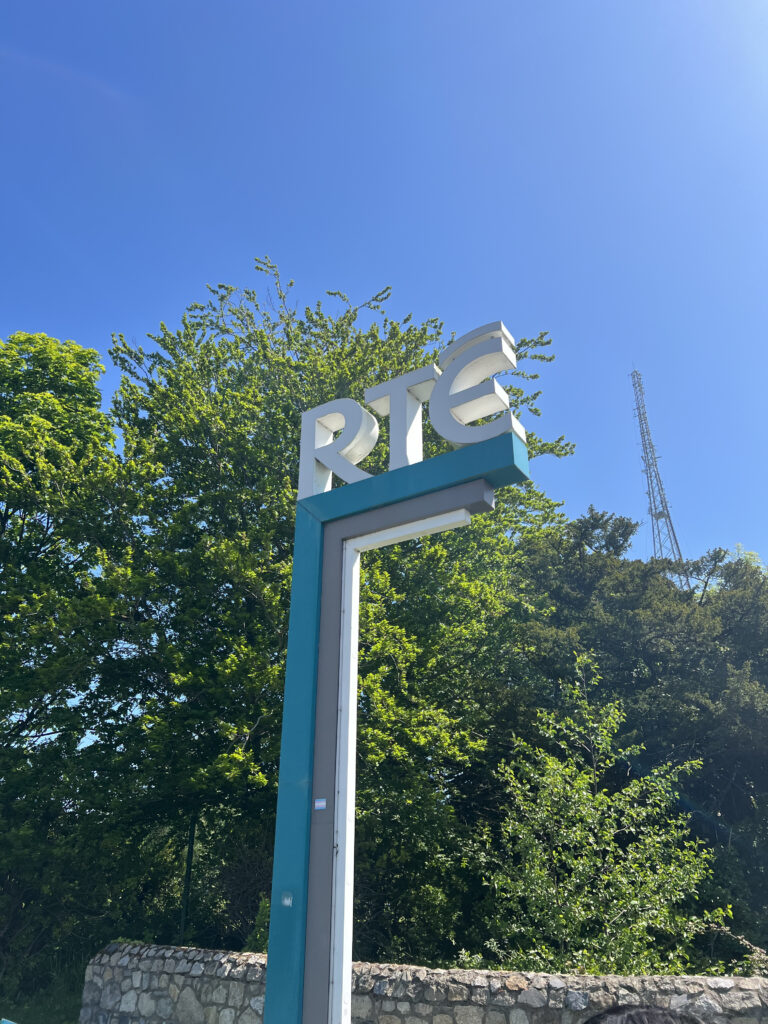
THE FOCUS
Throughout the semester, I spent time focusing on RTÉ, not only doing extensive research on it, but also writing about it and presenting my findings to the class. The knowledge I have obtained regarding RTÉ as well as the experience I have in television studios made me feel comfortable and confident in my understanding walking into the tour.
Additionally, although many topics were covered throughout our tour, for the sake of specificity, I will be talking directly about the television production process as well as our experience witnessing a live broadcast. That is not to say that the other content we discussed (like radio and other guest lectures at RTÉ) were not important, I simply want to focus this article on the content I am most comfortable with and interested in: television broadcasts.
RTÉ TOUR
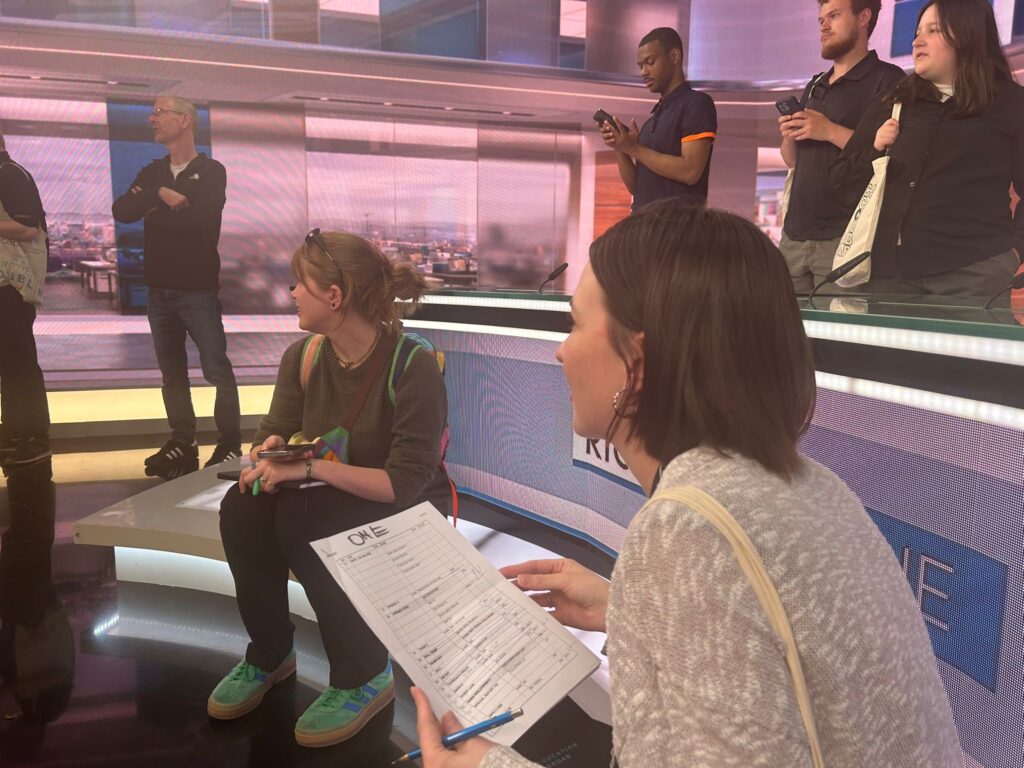
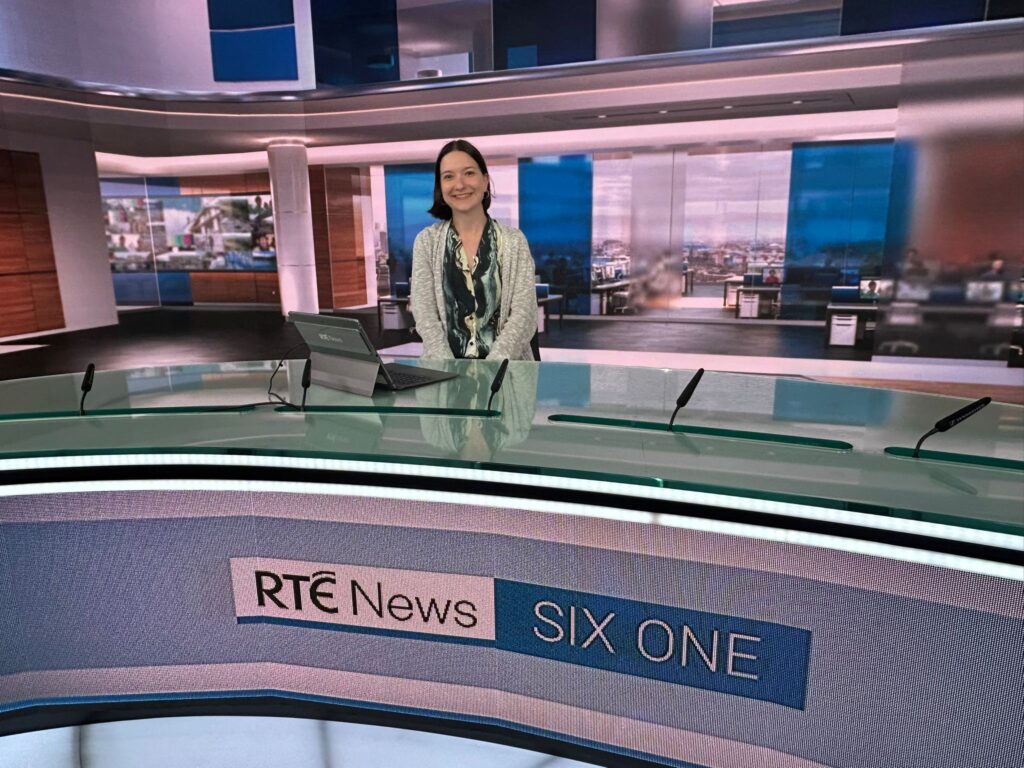
On Tuesday, May 13th, 2025, our class took a trip to visit and tour the operation center of RTÉ. We not only got the opportunity to see the studios and control room of both their radio and television broadcasts, but were able to stand in and witness the magic of broadcast news come to life as they put on the thirty-minute long, one o’clock newscast. I was not expecting to get this opportunity, but I was pleasantly surprised and extremely excited to watch them in real-time produce a broadcast and make live changes along the way. I personally feel that the best way to understand how a production works is to not only see the space, but watch it in action.
Prior to the show starting, we got a brief introduction to all of the different positions within the control room. Unsurprisingly, they were similar positions to what we have in the United States. However, what did stand out to me was the difference in terminology in role titles and the specific responsibilities for each job. For instance, there were six total positions within the control room: the Editor, the NCO (News Coordinator), the Director, the Vision Mixer, Cameras and Lighting, and Audio.
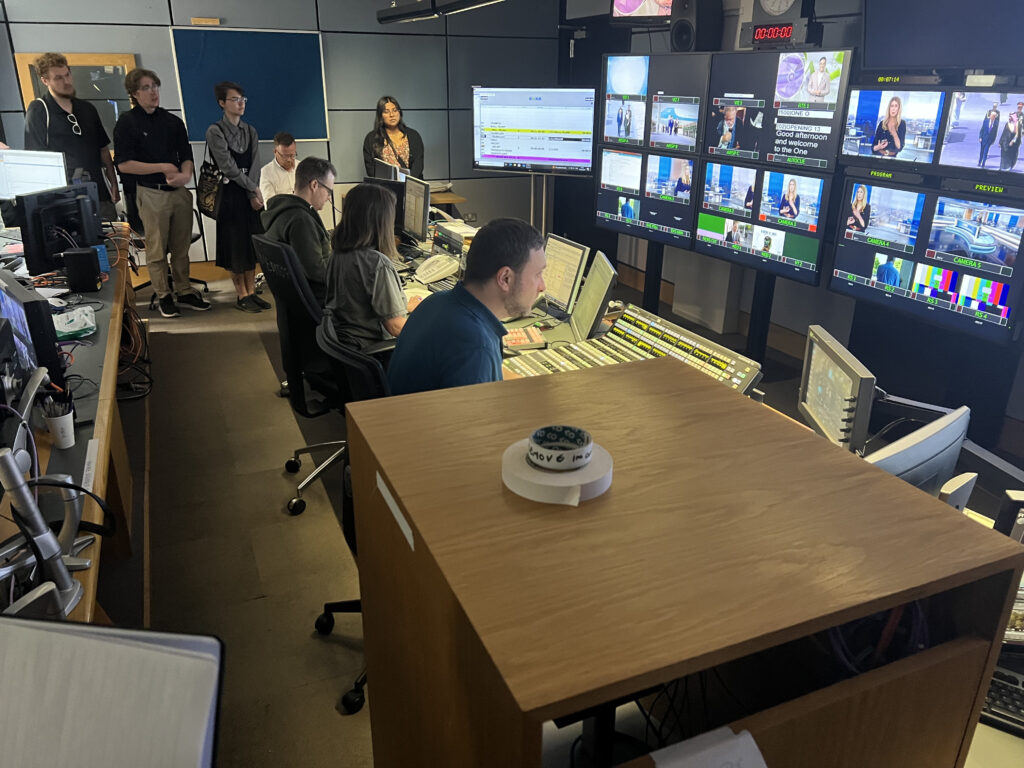
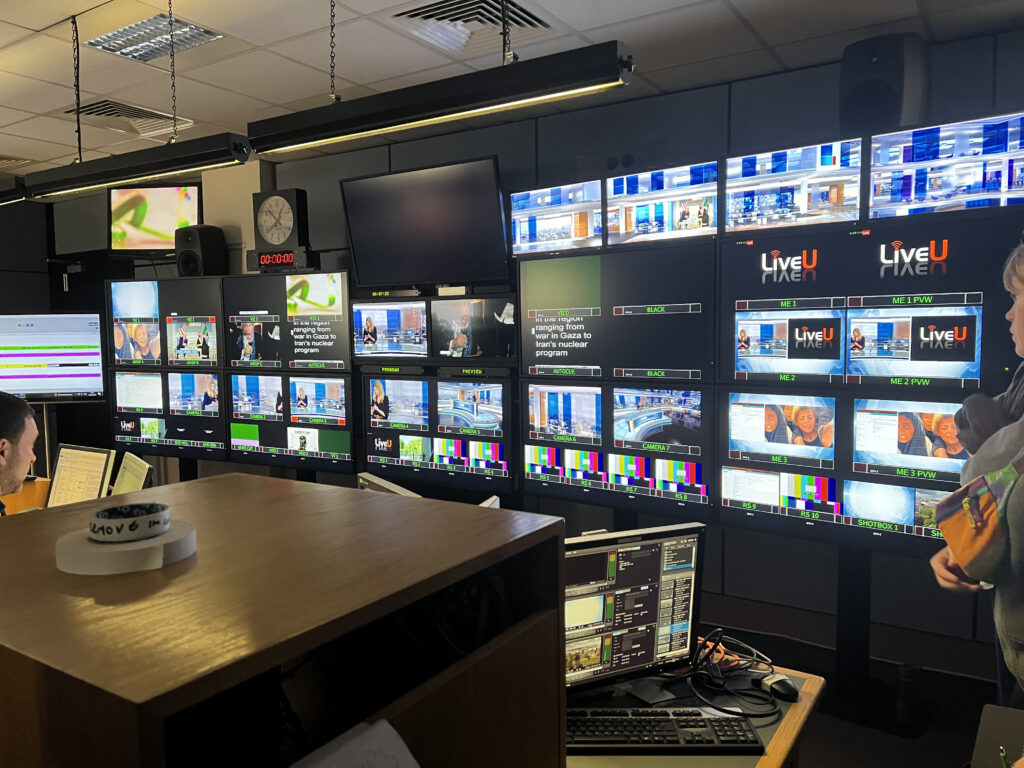
At first, these titles stood out to me, because they were a bit different to what I was used to. Of course we have positions like “director” and “audio”, but I was surprised to hear terms like “NCO” and “vision mixer”.
Here is a list of the positions and their roles:
- Editorial – real-time script editors
- NCO – AKA the show producer, manages and oversees the show. The NCO also fires up all the supers and graphics during the packages.
- Director – supervises the show and makes the calls on camera shots, graphics, live feeds, etc.
- Vision Mixer – AKA the Technical Director, the individual making all the punches that go out live for the world to see.
- Cameras and Lighting – its own position in the control room (not in studio), controls the camera angles of seven different cameras and the lighting within the studio to get the necessary shots.
- Audio – like audio in the States, controls the talent microphones, live feed, and package audio levels.
Additionally, there are a limited amount of people within the studio during productions – the talent and the floor director/teleprompter operator.
- Talent – known as presenters at RTÉ
- Floor Director/Teleprompter Operator – Although I wasn’t in the studio during the production I did recognize that there was a very small amount of people while rolling. So although I never got a direct look, I am aware that there is someone who controls the prompter and someone to make sure that everything is under control on the floor.
In addition to the variance in role titles, there are also differences in other broadcast terminology that I picked up on during the broadcast. Some examples include:
| What I’m Used To | Terms they Used |
| Rundown | Bulletin |
| Close | Wrapper |
| OTS (Over the Shoulder graphics) | PW |
| GFX (graphics) | VIZ |
Although relatively the same to the broadcast operations in the United States, the terminology was more varied.
SOMETHING THAT SURPRISED ME
Something that genuinely surprised me was the ability for constant communication between the control room and the floor. Especially since there is virtually no one in the studio throughout the production, I was surprised by the communication between the presenter and the director. Like most stations, the presenter has an earpiece in their ear to be able to hear the directions and commands from the director, but what also surprised me was the presenter’s ability to also talk directly with the control room. This is possible through a special channel that goes from the microphone straight to the control room, allowing the presenter to talk without it going on air. I am sure this is a more common practice, but I’ve never seen it in practice prior to this experience.
Another thing that stuck out to me was RTÉ’s inclusion of “Kids News”, which takes place at around 4:20 PM daily for about ten minutes. This program offers real current events at an easily digestible and child-friendly level. This personally stood out to me because I think it offers children an opportunity to understand the world around them in a trusted and scare-free manner. Plus, it is a great introduction to media literacy and understanding when and where to trust the information you are hearing about. Although this is seen in the United States as well (CNN 10 is child-friendly, student news program), it was refreshing to see children being made a priority in this fast-paced environment.
TOUR TAKEAWAYS
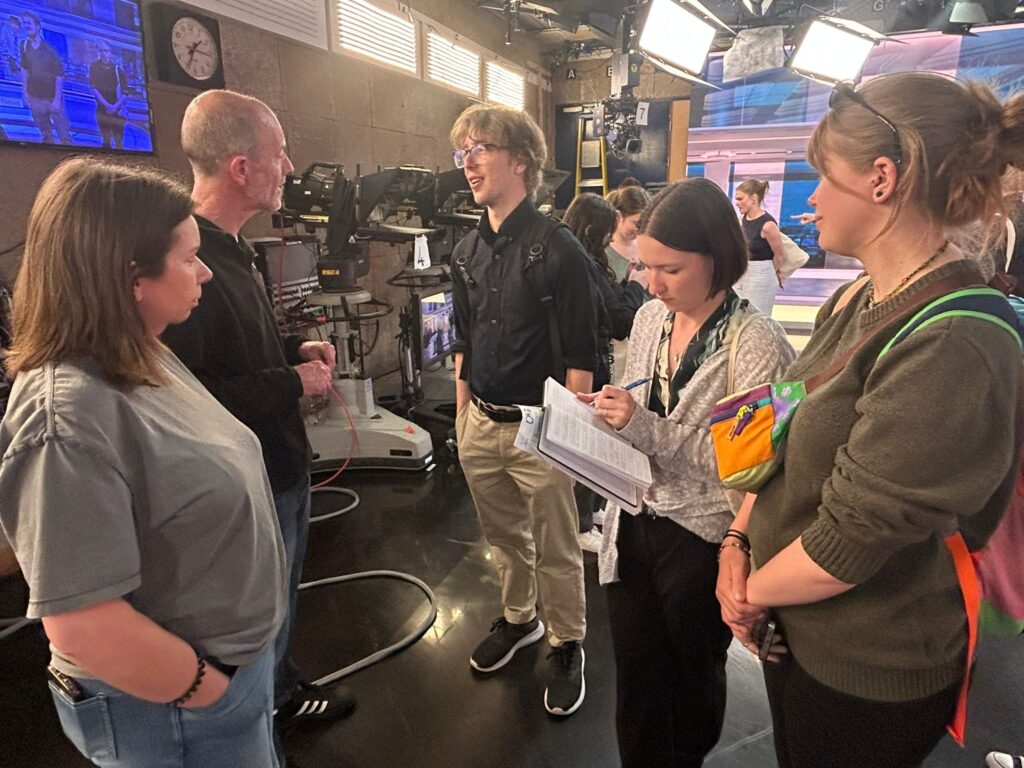
Our experience at RTÉ surpassed my expectations! Everyone involved was beyond welcoming and was more than happy to entertain our questions and curiosities. Their kindness, even in the midst of performing their jobs, was evident. I appreciated the conversations and the time taken to answer my questions and explain the different roles and responsibilities of each position. Additionally, I valued the willingness to let us stand in the control room and follow along with the rundowns (or bulletins) to which they graciously and enthusiastically let me grab (even letting me keep a rundown that they had marked up during the show so I could see the changes that were made).
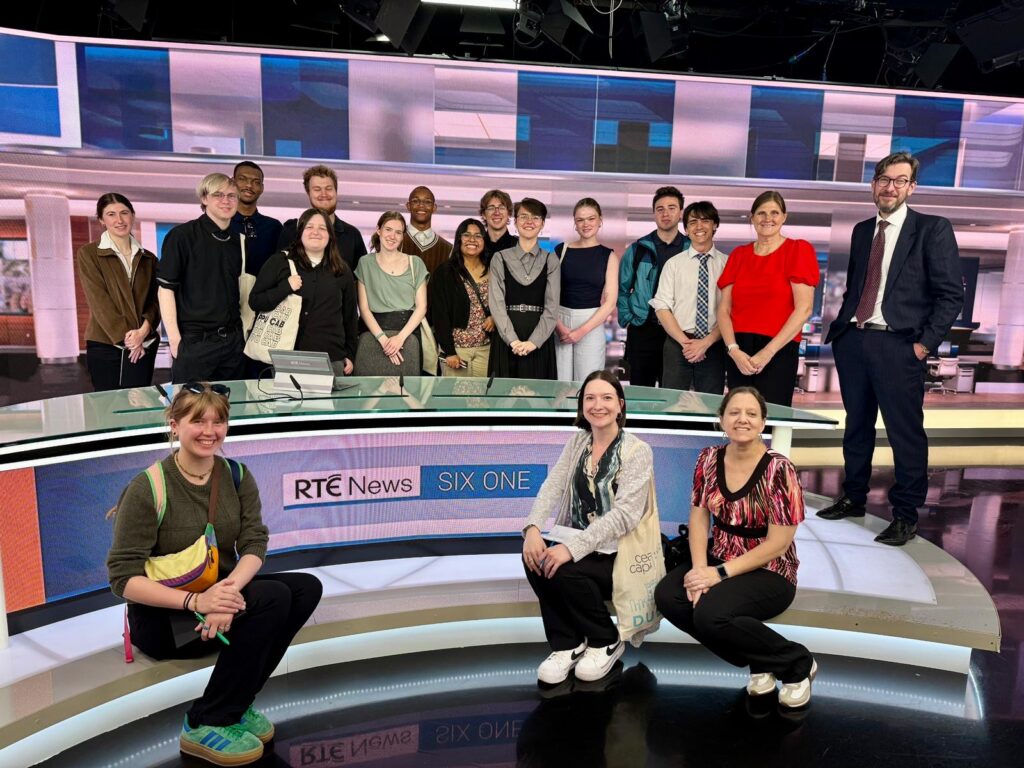
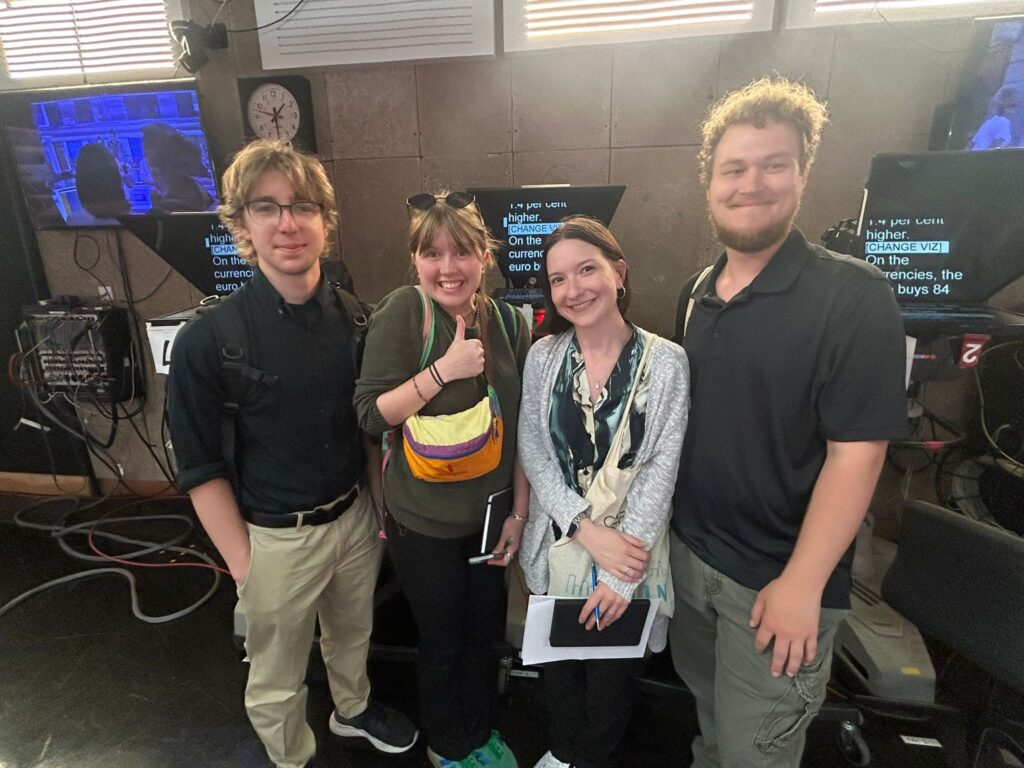
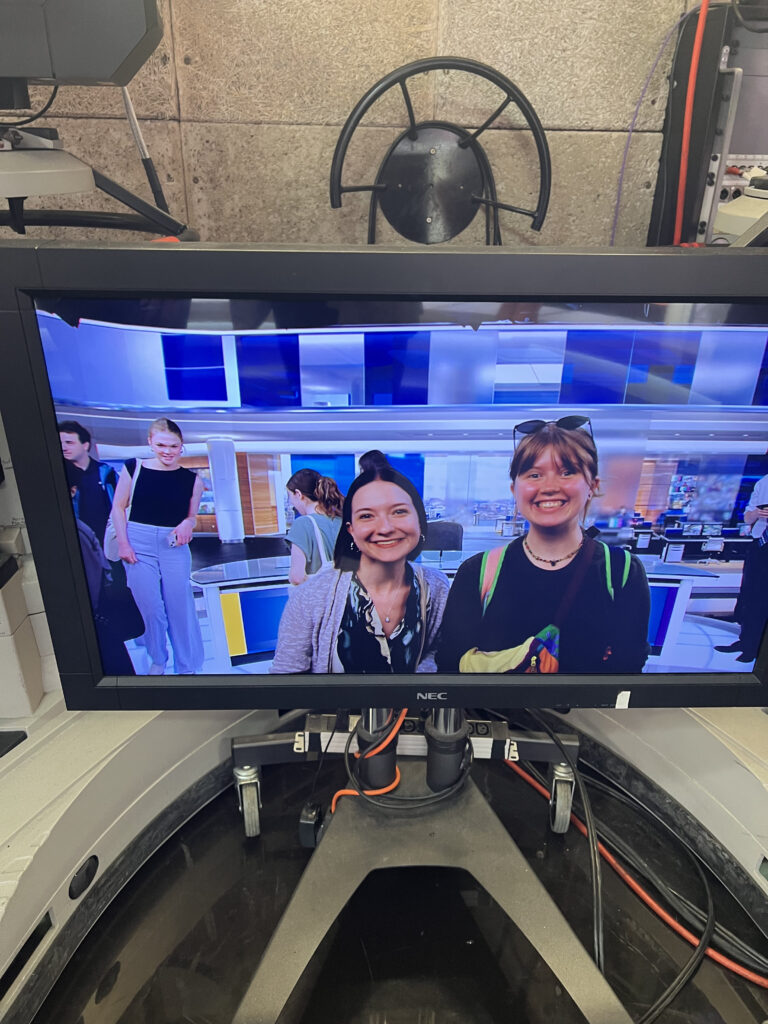
I mentioned in my blog post I made about RTÉ how I have been fortunate to witness various studios and control rooms throughout my college career (PNC Park, WTAE, Madison Square Gardens, the Today show). Not only was this my first international studio experience, but it was also the first one that would actually let us be inside the control room for the entirety of the broadcast and be in the studio afterwards.
The environment was much more “zen” compared to the hustle and bustle of U.S. broadcasts. Although fast paced, there was a particular sense of peace that I feel like most studios do not have. Maybe it was because RTÉ’s productions were much smaller on scale compared to the stations in the States, but regardless, they maintained this level of simplicity and professionalism all at once, which impressed me to say the least.