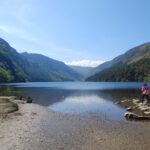
This morning, before our scheduled lecture, I went on a peaceful “Mary walk”—a ritual I’ve started, named after the statue of Mary I pass each time. I ended up in a park filled with people stretched across the grass, soaking in the rare Dublin sun.
It felt like a small exhale before diving into one of the densest and most thought-provoking sessions of the trip. Our guest lecturer was Dr. Niall Gilmartin, a peace studies scholar specializing in the Northern Ireland conflict. He had just landed from Rome, but you wouldn’t know it from his energy—he’ll also be our guide tomorrow.
Dr. Gilmartin opened with a bold assertion: everything in Northern Ireland is filtered through a binary—Protestant/Catholic or Unionist/Nationalist. He emphasized how contested these identities are, similar to how we see Gaza portrayed today: not just through politics, but through the media, which he argued is never neutral.
Citing Denis McQuail, he described media as an arena of debate for shaping public policy. We explored external vs. internal regulation: governments creating broadcast laws versus self-censorship by news outlets.
Through Chomsky and Herman’s propaganda model, we looked at how media serves dominant powers—often through selective sources and funding ties.What stuck with me was how this manifests in coverage of the Troubles.
Dr. Gilmartin noted how British media avoided language like “massacre” or “terrorist,” instead sanitizing violence and leaning into anti-IRA sentiment. The BBC, early on, was deferential to the state and avoided portraying discord. This left the Irish Catholic perspective largely invisible until outlets like RTÉ stepped in.
When civil rights marches were held, cameras often weren’t rolling. One example that stood out: an anti-terror advert from the 1990s subtly directed blame toward the IRA, with no British soldiers shown—quiet but calculated bias.
He ended with questions we should keep asking: Who gets blamed? What defines “terrorism”? What are the consequences of media silence? We also watched clips connected to a journalists’ union strike, triggered by the British government censoring a documentary featuring Martin McGuinness—not out of sympathy for him, but to protect freedom of speech.
It challenged my assumptions about objectivity. If truth is filtered through regulation and fear, how do we trust what we see? As an actor and communicator, I left the room thinking deeply about how performance—whether on stage or screen—is never neutral. And how dangerous silence can be.