May 20th: Day Fifteen
Today the group went to visit the Dali, aka the Irish Parliament Building. Before we walked over though, we spent a half an hour at the CEA Center learning a brief rundown of Irish Government and how it works. Their form of government is a Parliamentary Democracy, which has been running since 1922.
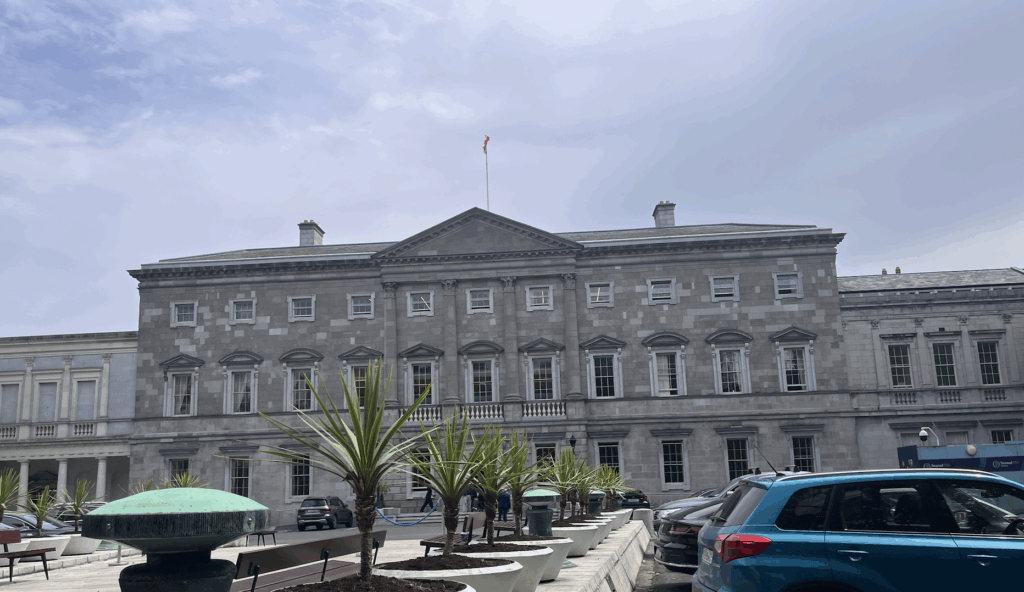
The government is split into three sections. The first is the president, or as they call them Uachtarain. The president really does not hold much power though, they are more there for signing bills and ceremonies. The president needs the approval from the Prime Minister of their speeches to make sure it is good before they speak it. The Prime Minister also is in charge of whether or not the president can leave the country.
Then they have the Upper House, or as they call it, Seanad (The Senate). The leader of the senate is called the Cathaoirleach. Then the last part is the Lower House, or the Dail, which is where we visited today. The leader of the Lower House is the Taoiseach (Prime Minister), which is who I mentioned before who givers permission to the president for certain things.
I found it interesting that their election is held every 5 years, and not every 4 years like we have it in the States. It was also interesting to learn that they can run an early election, which I personally do not think is fair for the other parties, and just the people of Ireland in general.
The way voting works in Ireland was also shocking to me. Instead of picking the candidate you want, you rank them in order of who you like the best to who you like the least. They do it that way, so out of the top five candidates you pick, one of them is likely to get chosen.
For our last guest lecture, we had Martina Devlin speak to us, who is an award-winning novelist and journalist. She spoke to us a bit about media, and some stories from her career. Her first main point was about the internet, and how it has changed the way people view media and news. Stories to need have a strong heading or description to make people want to read a story. If stories are too long, people will scroll away. If the heading is too boring, people will scroll away.
She also mentioned how she feels that novels have space for the people who have been sidelined by history. I agree with that statement, because you never get the full reactions of history just from the people directly involved. There are so many different perspectives and stories from civilians of different historical events. I always enjoy stories from the perspective of an “outsider” because it gives a different take on something you may already know so much about from the “main” standpoint.