Today we visited the Irish Film Classification Office (IFCO)—a visit that turned out to be far more thought-provoking than I expected. IFCO isn’t a censorship board; it’s a team of professionals who classify films based on age appropriateness using context as their compass.
It’s not just about how much violence, sex, or strong language is in a film—it’s about why it’s there. Is the content educational? Is it exploitative? Is it played for shock or handled with care?What struck me most was their emphasis on context over content.
For instance, a scene involving drugs or suicide might receive a lower age rating if portrayed with consequences, maturity, or emotional insight. I also found it fascinating that the “18” rating is rarely used.
In the last year, only six films received that classification, one being the latest Saw installment. They try to keep films accessible to younger audiences without compromising on honest content.
We watched a short film with a 15A rating, and while I initially thought the violent opening would push it higher, I began to understand the reasoning. It wasn’t gratuitous—it had emotional depth. The themes of grief and desperation were human, not sensational.
I also learned about Ireland’s more nuanced approach to language—“feck” vs. “f*ck”—and how colloquial use affects classification. Where France is relaxed about sex and the U.S. is strict on language, Ireland seems to balance both by thinking critically about impact and intent. It made me realize how deeply cultural norms influence media gatekeeping.
Another surprise? Everyone at IFCO works part-time and comes from diverse backgrounds—law, psychology, education—bringing their own expertise to the table. Unlike the censorship-heavy past, today’s IFCO promotes transparency and trust in viewers, a sharp contrast to trends in the U.S. where restrictions are tightening, even on books.
I couldn’t help but draw parallels to our previous media lecture, especially when our speaker mentioned that abortion only became legal in Ireland in the last decade, just as Roe v. Wade was overturned in the U.S. The push and pull between progress and regression is global.
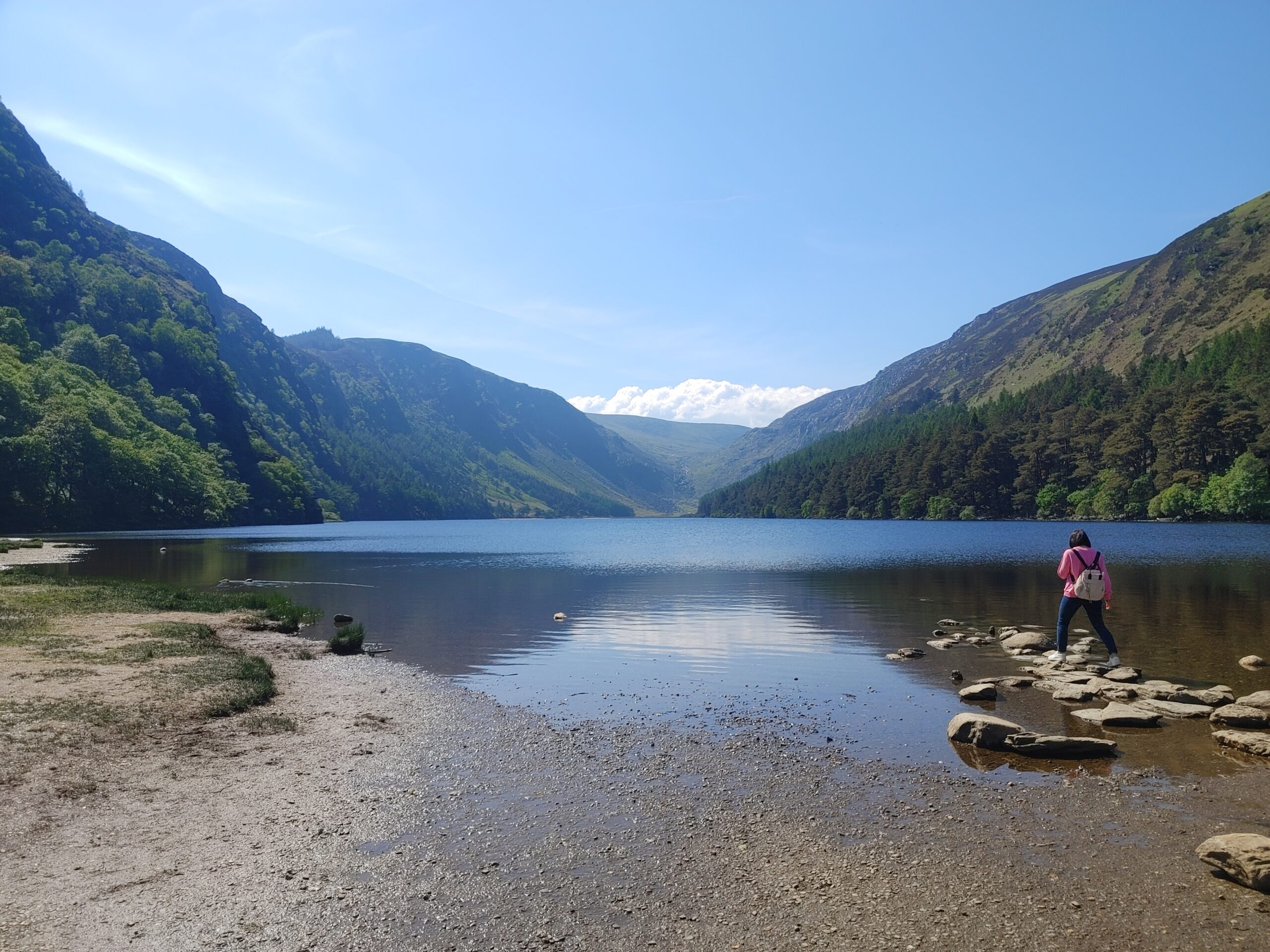
After IFCO, a couple of friends and I took a spontaneous trip to Glendalough in County Wicklow. Nestled between misty mountains and reflective lakes, we explored the remains of an ancient monastery and a quiet, moss-covered graveyard.
The tour guide wasn’t quite as engaging as the one from our last Paddywagon trip, but the views were absolutely breathtaking—until I slipped into a creek. Nothing says “Irish adventure” like spending the rest of your day soaking wet. Thankfully, my shoes dried out by evening.
All in all, a day full of contrast—between wet socks and warm insights, tradition and progress, violence and compassion. I’m still thinking about that gold coin left behind at the end of the film. Maybe not all treasure is meant to be kept.