Today was full of motion, meaning, and a bit of taco juice. It began very early—around 5 a.m.—when Rueben and I caught our flight back from London. We’d just spent a few adventurous days in a hostel (my first one!), which was loud, quirky, and oddly memorable.
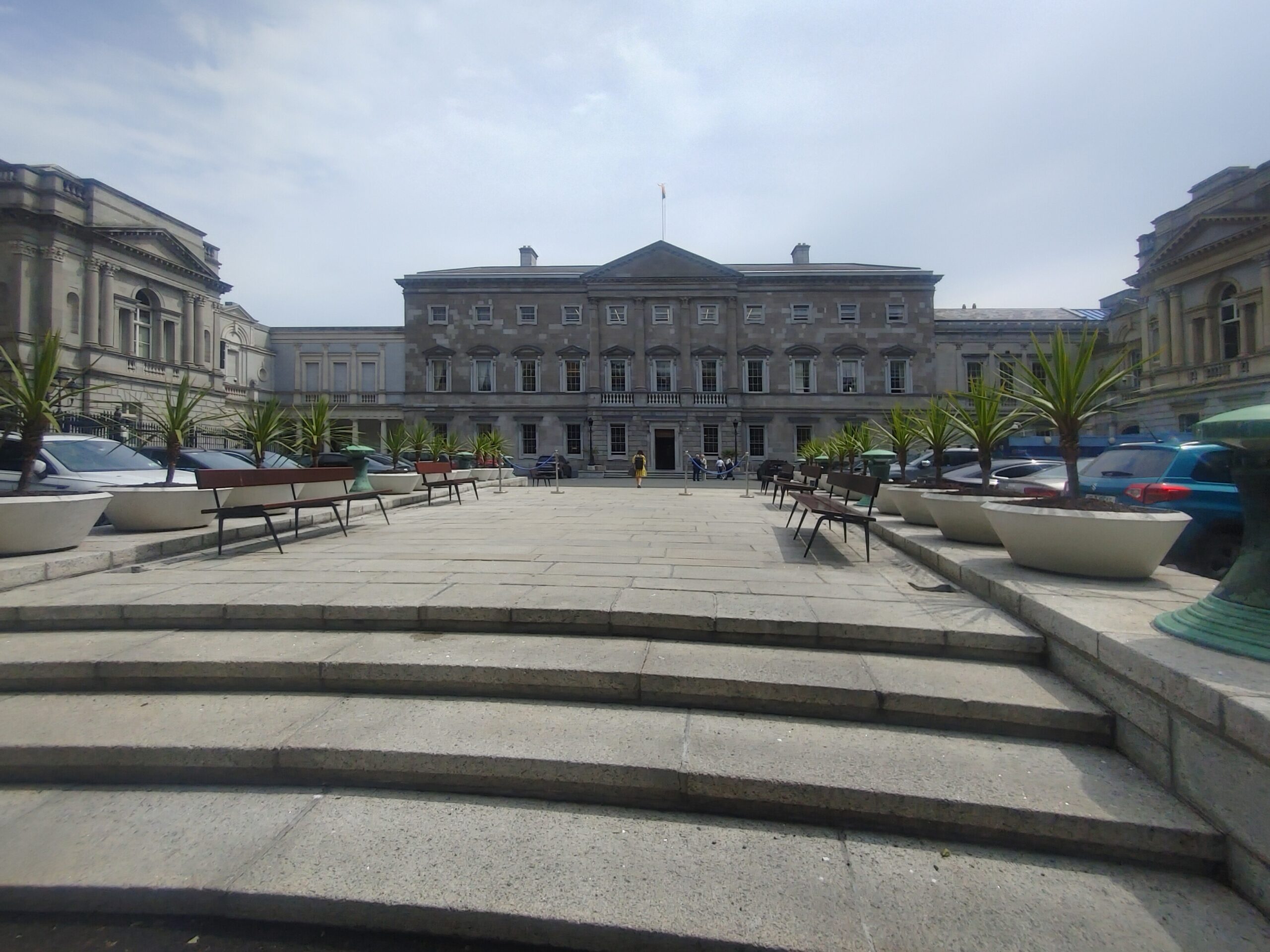
After a delayed departure, we made it back just in time to catch the political presentation and Parliament visit. I’m so glad we didn’t miss it—what we saw and heard changed the way I think about democracy.
At the heart of the day’s learning was Ireland’s ranked-choice voting system, which I found incredibly smart and fair. It allows for nuance instead of the binary, winner-takes-all setup we’re used to in the States. That shift alone could transform the political polarization we face back home. I was also struck by the rule that prevents politicians from calling each other liars—it’s simple, but fosters real dialogue.
And visually, the Parliament chamber was stunning. I loved how their voting system uses color-coded lights to show the results—a clear and intuitive representation of democratic decision-making.
Inside the building, we were surrounded by Irish political history—portraits of prime ministers, a mural of the first women in government, and even a painting of British actor John Loder, updated to reflect changing times by adding a woman to the foreground. It was surreal to walk those halls. I also learned the official color for St. Patrick is blue, not green. Who knew?
Afterward, we grabbed burritos for lunch (Sydney had a taco incident) and did some spontaneous shopping. Later, we returned to the classroom for a conversation with Martina Devlin, an award-winning Irish journalist and novelist.
She was compelling, candid, and clearly passionate about the evolving role of journalists. Her message was clear: This is a defining moment for the media. Governments are using journalists to shape narratives—but journalists must ask tough questions without becoming cynical or jaded. That balance—between skepticism and hope—is something I really resonated with.
Martina also shared her journey from journalism to fiction, including her novel about 1960s gangster Reggie Kray. I loved her emphasis on clarity, brevity, and honesty in writing—especially how hard it actually is to be simple.
She showed how storytelling, whether in a novel or news article, depends on trusting your audience and using dialogue, rhythm, and image-rich language. As an actor, I connected with her thoughts about stage directions—how fewer words can actually say more. Her insight that you don’t always need to explain everything reminded me that in both journalism and theatre, what’s felt can be more powerful than what’s said.